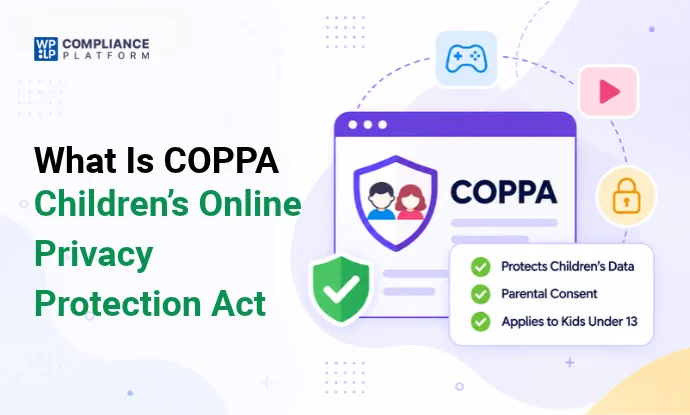
The Children’s Online Privacy Protection Act (COPPA) is a U.S. law that protects the personal information of children under 13 online. If your website, app or online service is aimed at children, or you know you collect data from children under 13, you must get a parent’s verifiable consent first and follow strict rules on how you use that data.
Why Kids’ Privacy Law Matters
Children are online younger and for longer than ever, and much of what they do leaves a data trail. Ad networks, analytics tools and in-app features can build profiles of children, expose them to unwanted contact, or leave their data at risk in a breach.
Regulators treat this as a priority. Some of the FTC’s largest COPPA cases:
| Company | Year | Penalty | What the FTC alleged |
|---|---|---|---|
| Disney | 2025 | $10 million | Child-directed YouTube videos weren’t labeled as made for kids, so data was collected for targeted ads |
| Microsoft (Xbox) | 2023 | $20 million | Collected children’s data at Xbox sign-up before getting parental consent |
| Epic Games (Fortnite) | 2022 | $275 million | Collected children’s data without parental consent; voice and text chat on by default |
| Google and YouTube | 2019 | $170 million (with New York) | Tracked viewers of child-directed channels for targeted ads |
| Musical.ly (now TikTok) | 2019 | $5.7 million | Collected children’s names, emails and photos without parental consent |
What Is the Children’s Online Privacy Protection Act (COPPA)?
Congress passed COPPA in 1998, and the FTC’s rule putting it into practice took effect in April 2000. The FTC enforces it, and state attorneys general can bring COPPA cases too.
COPPA requires operators covered by the law to:
- Post a clear privacy policy describing how they handle children’s personal information
- Give parents direct notice and get verifiable parental consent before collecting a child’s personal information
- Let parents review their child’s information, have it deleted, and refuse further collection
- Collect only what’s reasonably necessary for an activity
- Keep children’s data secure and keep it only as long as needed
The FTC’s 2025 COPPA Rule Amendments
The FTC finalized the first major update to the COPPA Rule since 2013 on January 16, 2025. The amended rule was published on April 22, 2025, took effect on June 23, 2025, and most businesses had to comply by April 22, 2026.
The main changes:
- Separate consent for third-party disclosure. Operators need a parent’s separate opt-in before sharing a child’s data with third parties, including for targeted advertising, unless the sharing is integral to the service.
- Limits on data retention. Children’s data can be kept only as long as reasonably necessary for the purpose it was collected for, never indefinitely, and the retention policy must be written down and disclosed.
- Stronger security obligations for protecting children’s personal information.
- More personal information covered, including biometric identifiers and government-issued identifiers.
- New consent options, including limited use of a parent’s mobile number to text them for consent.
- More transparency for FTC-approved Safe Harbor programs.
Source: FTC announcement and the final rule in the Federal Register.
What Counts as Personal Information Under COPPA
COPPA’s definition goes beyond names and emails. It includes technical data that can identify or track a child over time:
- Full name, home address or other physical address down to a street or town
- Email address, phone number or other online contact information
- Usernames or screen names that work as contact information
- Social Security number and other government-issued identifiers
- Persistent identifiers, such as cookies, IP addresses and device IDs, that can recognize a user over time and across sites
- Photos, videos or audio files that contain a child’s image or voice
- Precise geolocation
- Biometric identifiers, such as fingerprints, voiceprints or facial templates
- Any other information collected from a child and combined with the above
This means that ad tags and some analytics tools on a child-directed site can trigger COPPA even if you never ask for a name.
Who Must Comply With COPPA?
COPPA applies to operators of commercial websites, apps and online services that:
- Are directed to children under 13, in whole or in part, or
- Have actual knowledge that they collect personal information from children under 13, even if they target a general audience.
It also covers third parties, such as ad networks and plugins, that know they collect data from users of a child-directed site. It applies to apps, games, connected toys and smart devices as well as websites, and to companies outside the U.S. whose services are directed to, or knowingly collect data from, children in the U.S.
What counts as child-directed content?
The FTC looks at the service as a whole, including its subject matter, visual and audio content, animated characters, child-oriented activities and incentives, the age of models, child celebrities, advertising aimed at children, and evidence about who actually uses it.
A general-audience site that appeals to children without targeting them mainly can be a “mixed audience” site. It may use a neutral age screen and apply COPPA’s rules only to users who say they’re under 13.
What Rights Do Parents Have Under COPPA?
- Notice: to be told clearly what information is collected from their child and how it’s used and shared.
- Consent: to approve collection before it happens, and, since the 2025 amendments, to give separate consent before data is shared with third parties.
- Review: to see the personal information collected from their child.
- Deletion: to have that information deleted.
- Refusal: to stop further collection or use of their child’s data.
Parents can report suspected violations to the FTC.
How to Get Verifiable Parental Consent
The FTC accepts methods “reasonably calculated” to confirm that the person consenting is the parent, including:
- A signed consent form returned by mail, fax or electronic scan
- A credit card, debit card or other online payment system that notifies the account holder of each transaction
- A call or video call with trained staff
- Checking a government ID against a database, then deleting it
- Knowledge-based questions that only a parent could reasonably answer
- “Email plus”, but only when you use the data internally and don’t disclose it
An age gate on its own isn’t verifiable parental consent. It tells you who might be a child. You still need one of the methods above before collecting their data.
Age checks without consent (FTC policy, February 2026). The FTC won’t bring a COPPA case against a general-audience or mixed-audience service that collects personal information only to work out a user’s age, if it uses that information for nothing else, deletes it promptly, explains it in its privacy policy, keeps it secure and uses a reasonably accurate method. This doesn’t apply to sites aimed mainly at children, and once a check shows a user is under 13, COPPA applies in full. See the FTC policy statement.
The consent journey, step by step:
- Age screen: ask for age neutrally before collecting anything else.
- Parent’s contact: for users under 13, collect only the parent’s contact details.
- Direct notice: tell the parent what you’ll collect, why, and whether you’ll share it.
- Verify and record: confirm consent with an FTC-accepted method, and record who consented, when, how and to what. Ask separately before sharing data with third parties.
- Delete if no answer: if the parent doesn’t consent within a reasonable time, delete their contact details.
- Honor changes: let parents review, delete or withdraw consent at any time, and stop collection when they do.
COPPA Penalties and Fines for Non-Compliance
Civil penalties can reach $53,088 per violation (FTC COPPA FAQ). The amount is per violation, not per day. The FTC adjusts its civil penalties for inflation from time to time, so check its COPPA FAQ for the current figure.
Because each child’s data can be a separate violation, totals add up quickly, as the cases above show.
COPPA vs GDPR
| COPPA | GDPR | |
|---|---|---|
| Region | United States | European Union and EEA |
| Who it protects | Children under 13 | Everyone, with extra protection for children |
| Age of consent | Under 13 need verifiable parental consent | Parental consent for under-16s when consent is the legal basis for online services offered directly to children; countries can lower the age to 13 |
| Applies to | Services directed to children, or with actual knowledge of child users | Any organization processing data of people in the EU |
| Scope | Children’s data only | All personal data |
If your service reaches both U.S. children and European users, you’ll usually need to meet both.
Global Child Data Protection Laws
COPPA is one of several children’s privacy laws. The age limits and rules differ:
| Law | Where | Age covered | Key requirement |
|---|---|---|---|
| COPPA | United States | Under 13 | Verifiable parental consent before collection |
| GDPR (Article 8) | European Union | Under 16, or 13–15 where a country has lowered it | Parental consent when consent is the legal basis for online services offered directly to children |
| UK GDPR and Children’s Code | United Kingdom | Consent: under 13. Children’s Code: under 18 | Parental consent under 13; high-privacy defaults for services likely to be used by under-18s |
| California Age-Appropriate Design Code Act | California | Under 18 | Most provisions blocked by federal courts; check the current status before relying on it |
| Digital Personal Data Protection Act | India | Under 18 | Verifiable parental consent; no tracking or targeted ads aimed at children. Obligations are being phased in, so check which already apply |
| PIPL | China | Under 14 | Children’s data is sensitive; guardian consent required |
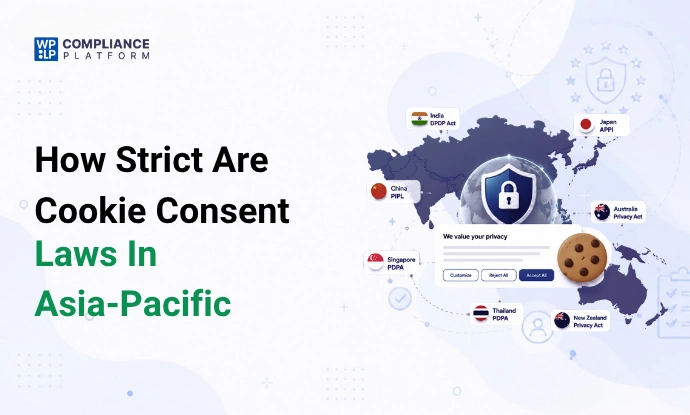
Australia’s Privacy Act and Japan’s APPI set no fixed age of consent. Regulators judge a child’s capacity case by case, and Australia is developing a Children’s Online Privacy Code. Check the current guidance if you have users there.
How Businesses Can Comply With COPPA
Steps marked Required come from the COPPA Rule. Recommended steps are good practice.
- Work out whether COPPA applies. (Required) Decide whether your service is child-directed, mixed-audience or general-audience, using the FTC’s factors above.
- Map the data you collect. (Recommended) Include data collected by cookies, ad tags, analytics and embedded content.
- Post a COPPA-compliant privacy policy. (Required) Explain what you collect from children, how you use and share it, your retention policy and parents’ rights.
- Get verifiable parental consent. (Required) Use an FTC-accepted method, and get separate consent before disclosing data to third parties.
- Give parents control. (Required) Let them review and delete their child’s data and refuse further collection.
- Limit and protect the data. (Required) Collect only what’s needed, keep it secure, and delete it once you no longer need it.
- Check your third-party tools. (Required) Turn off behavioral advertising and tracking on child-directed pages unless parents have separately consented.
- Review regularly. (Recommended) Audit your data practices every six months and whenever you add a feature or tool.
Best practices for consent and notices
- Use plain language that parents, and where relevant children, can understand.
- Make choices clear, with simple Agree and Disagree buttons or toggles, and no pre-ticked boxes or nudges.
- Keep consent records that show who consented, when and to what.
- Treat age screens neutrally: don’t hint at the “right” age or let users simply go back and change their answer.
Tools that can help
The WPLP Compliance Platform for WordPress includes:
- A COPPA privacy policy template (paid plans)
- An age verification popup (paid plans)
- Consent logs you can export for audits
- Data request forms parents can use to ask about or delete their child’s data
These help with the paperwork, but they don’t replace verifiable parental consent. You still need an FTC-accepted consent method before collecting a child’s data.
FAQ
What is COPPA?
COPPA is a U.S. federal law that protects the personal information of children under 13 online. It’s enforced by the FTC.
Who does COPPA apply to?
Operators of commercial websites, apps and online services directed to children under 13, and general-audience services that know they collect personal information from children under 13. This includes online forums, chat features, games and connected devices, and companies outside the U.S. with U.S. child users.
What counts as child-directed content?
The FTC looks at the subject matter, visuals, animated characters, child-oriented activities, music, the age of models, child celebrities, ads aimed at children, and evidence of the actual audience.
What age is covered under different laws?
COPPA covers children under 13. Under the GDPR, parental consent is needed for under-16s when consent is the legal basis for online services offered directly to them, and countries can lower that to 13. The UK’s consent age is 13, while its Children’s Code covers under-18s. India’s DPDP Act covers under-18s, and China’s PIPL treats data of children under 14 as sensitive.
How can I verify parental consent online?
Use an FTC-accepted method, such as a signed consent form, a card payment that notifies the account holder, a call or video call with trained staff, a government ID check, or knowledge-based questions. An age gate alone isn’t enough.
What are the penalties for non-compliance with COPPA?
Up to $53,088 per violation, according to the FTC’s COPPA FAQ. Penalties are per violation, not per day, and the FTC adjusts the amount for inflation from time to time.
What is the easiest way to add a child privacy policy on WordPress?
Use a policy template built for COPPA, such as the one in WPLP Legal Pages on paid plans, and customize it with your actual data practices. Then link it from your homepage and every page where you collect children’s information.
Conclusion
COPPA applies to more sites than many owners expect, because cookies and ad tags count as personal information. Since April 22, 2026, the FTC’s amended rule also requires separate parental consent for third-party sharing and limits how long you can keep children’s data.
If your site is aimed at children or you know children use it, start with the basics: a clear privacy policy, verifiable parental consent, parent controls and no behavioral advertising without consent.
If you liked this article, read these as well:
- General Data Protection Regulation (GDPR)
- The California Privacy Rights Act (CPRA)
- Data Privacy Laws by Country
This article is for general information and is not legal advice. Figures come from the Federal Trade Commission (FTC).