

Generate a newsletter policy that explains how people signup, what you send, whether you track opens, and how to unsubscribe. Pick your email tool, answer a few questions, and publish it to WordPress in one click.
A newsletter policy explains how your email list works: how people sign up, what you send and how often, which email tool you use, and how to unsubscribe.
It sits behind your sign-up form, so people can read what they’re agreeing to before they give you their email address.
it also answers the questions subscribers ask: Did I sign up for this? Do you know when I open your emails? Will you sell my address? How fast will you stop emailing me?
Email marketing rules come from the US CAN-SPAM Act, the EU ePrivacy rules and UK PECR with the GDPR, and Canada’s CASL. The policy explains how you follow them. Your emails still need your business name, postal address and an unsubscribe link.
• Do You Need One? •
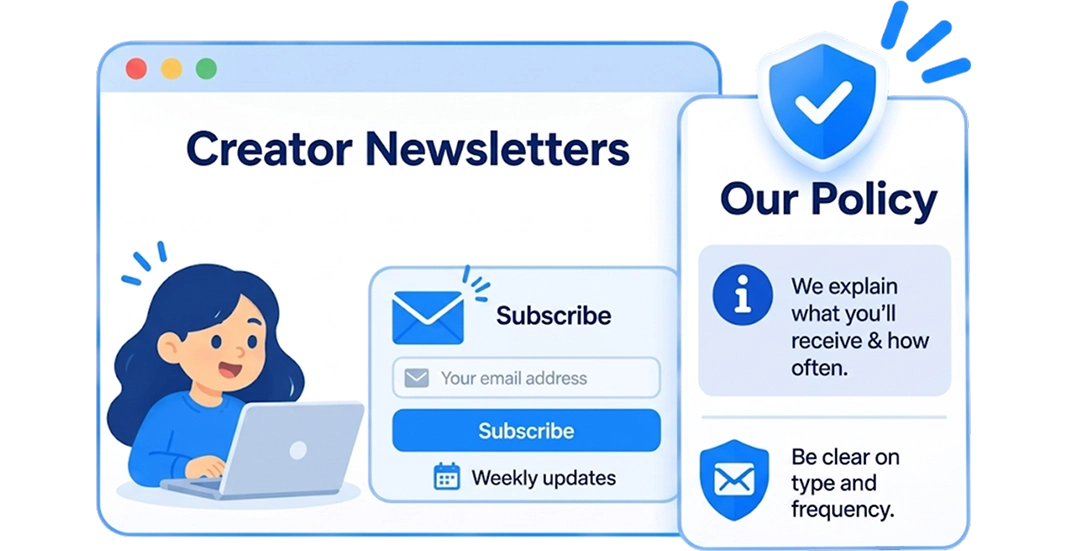
Readers sign up for updates. Your policy says what they'll get and how often.
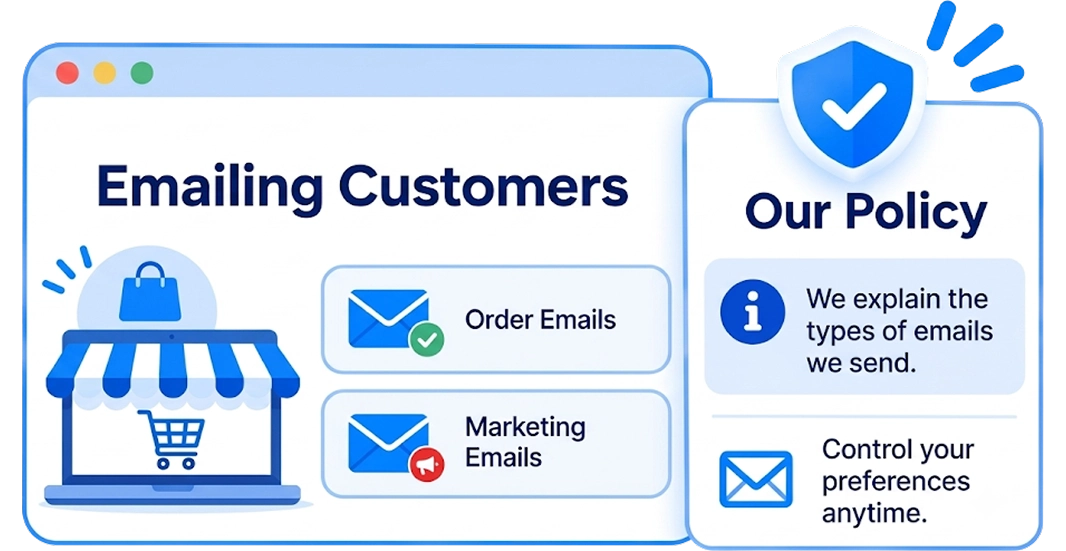
Order emails and marketing emails are different. Your policy says which is which, and whether you email past customers.
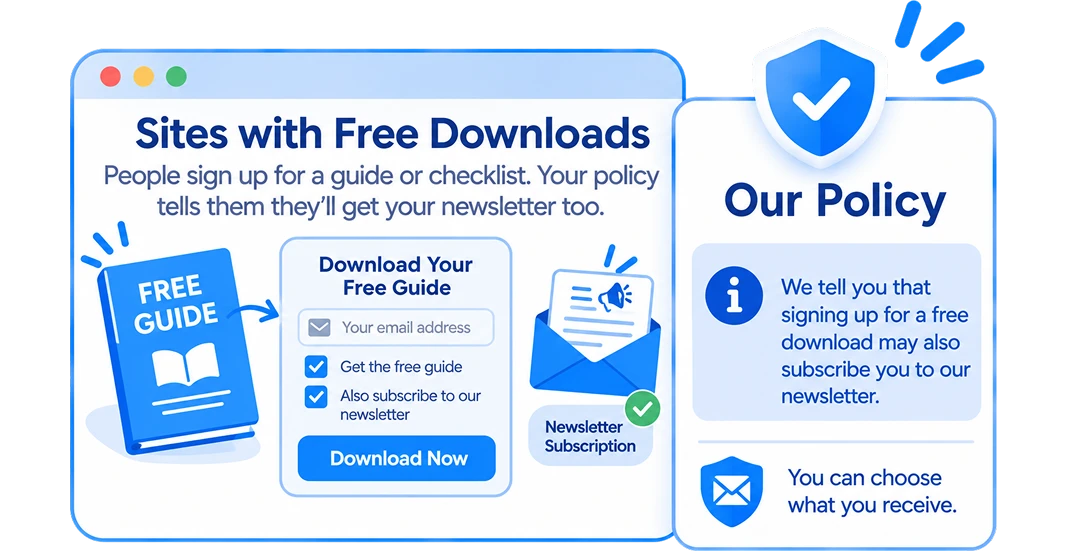
People sign up for a guide or checklist. Your policy tells them they'll get your newsletter too.
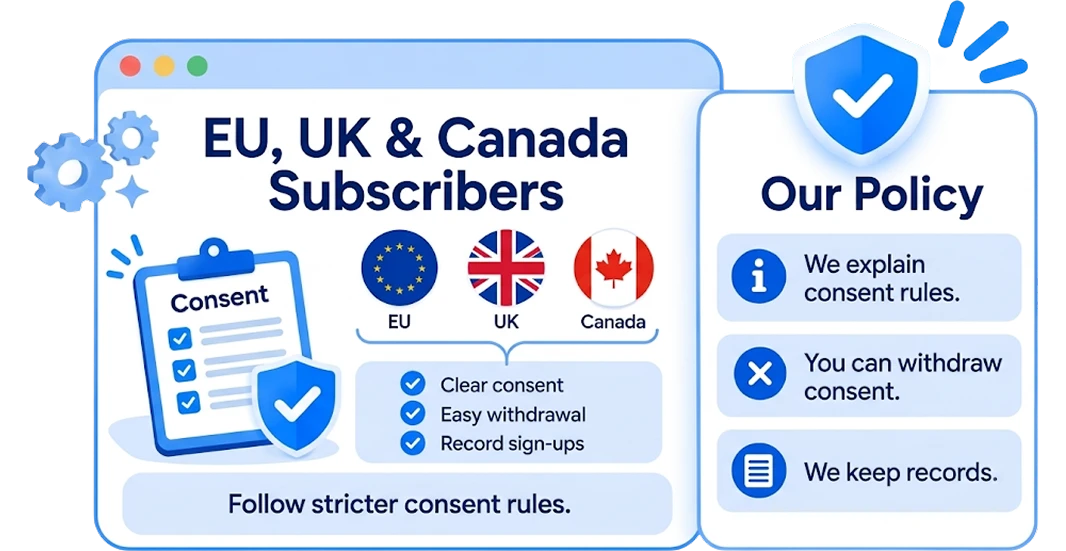
Consent rules are stricter. Your policy explains consent, how to withdraw it, and how you record sign-ups.
Pick your email tool. Describe your list. Publish.
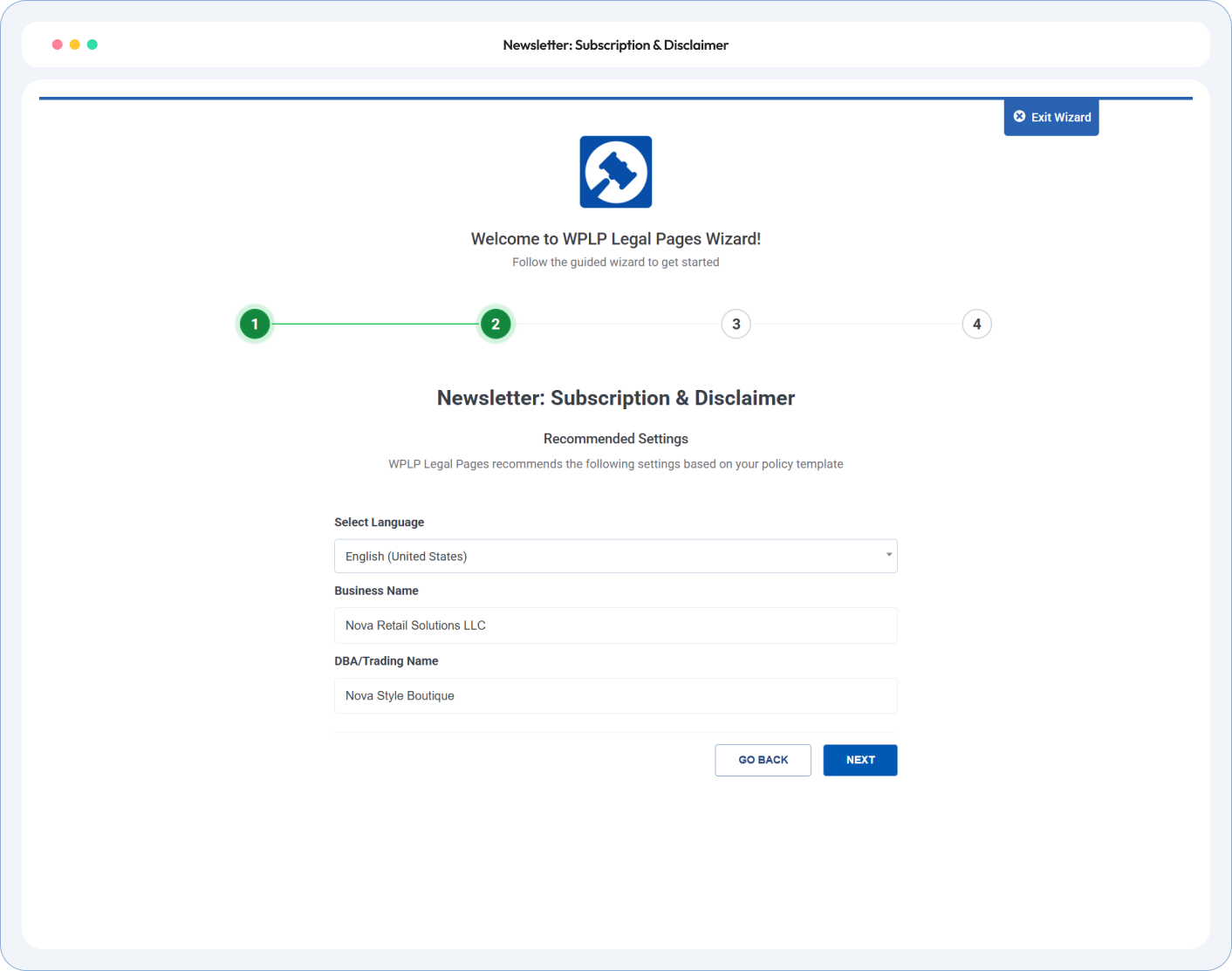
Choose Mailchimp, MailPoet, Kit, Brevo, Mautic or another tool. If one is installed, it's already selected. Your Privacy Policy uses the same answer.
Say where people sign up, whether you send a confirmation email, what you send and how often, and whether you track opens and clicks. Set your unsubscribe time. The generator won't accept more than 10 business days.
One click and the page is live. The generator offers to add links to this policy and your Privacy Policy below your sign-up form.
Your newsletter name, your email tool, your sign-up forms. Sections you don’t use are removed, so subscribers read only what’s true for your list.
• Policy Preview •
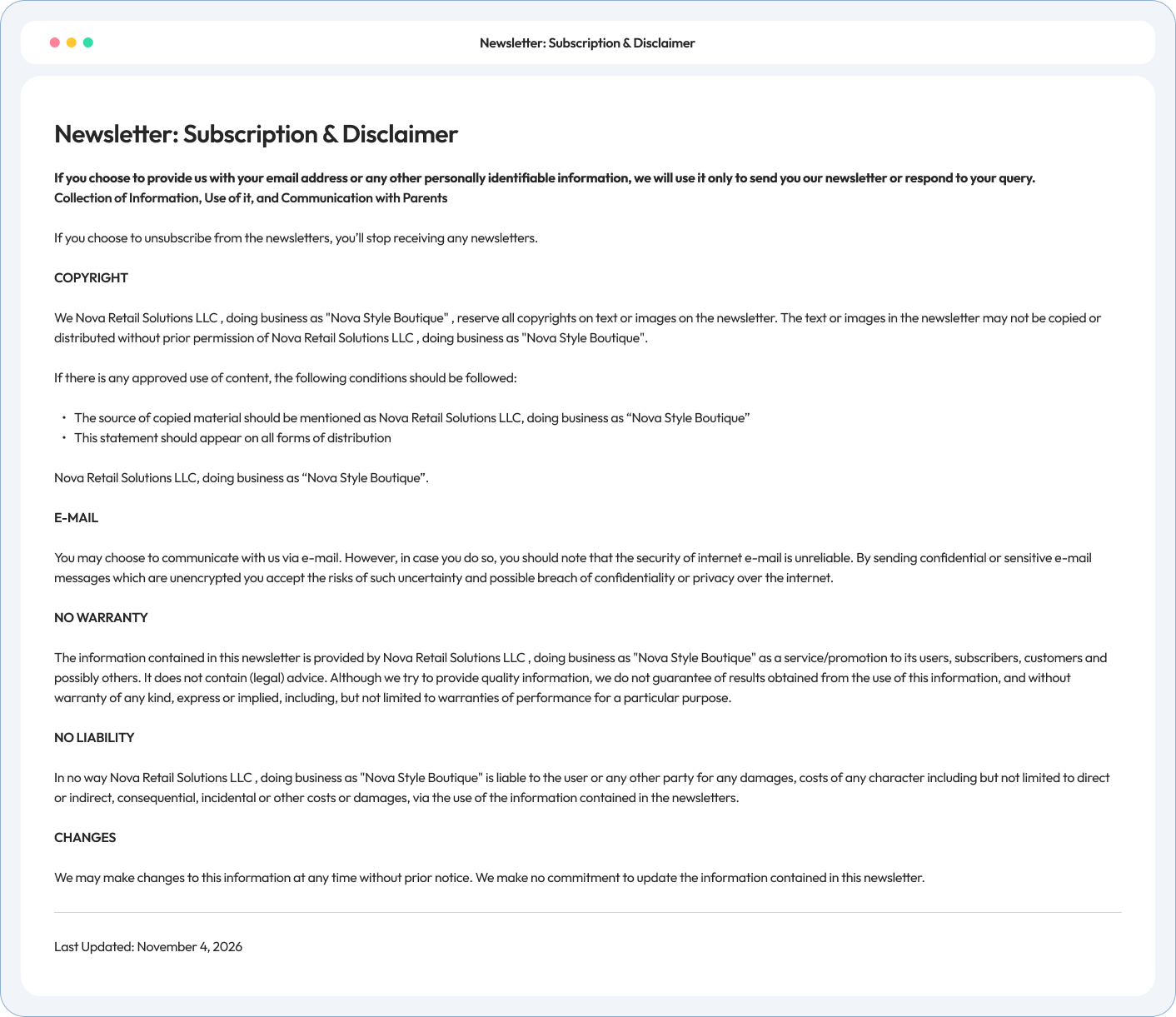
A sample policy with every section on. It opens with a short Key points summary. Yours shows only what your list needs.
4.7/5 on WordPress.org • Based on 20,000+ active WordPress installs
Site owners, agencies and developers on how WP Legal Pages handles their legal pages.
No law requires a page with that name. But email laws in the US, EU, UK and Canada set rules on consent, sender details and unsubscribes, and you have to tell people how you use their data. A newsletter policy linked from your sign-up form covers this in one place.
No. The newsletter policy covers your email list. Your Privacy Policy covers all the personal data your site handles, including transfers. The newsletter policy links to it, and the two share your email provider answer so they stay consistent.
Link it below your sign-up form, with your Privacy Policy, and in your footer. The generator offers to add the sign-up form links for you.
It isn’t required everywhere, but a confirmation email is the clearest way to show that someone agreed. If you have EU or UK subscribers and keep no consent record or confirmation email, the generator warns you before you publish.
CAN-SPAM and CASL allow up to 10 business days. The generator won’t publish a policy with a longer time, and the policy says you’ll act as soon as you can.
In the EU and UK, only under the soft opt-in: existing customers, your own similar products, and a chance to opt out when you collected the address and in every email. Turn it on in the wizard if you use it.
Yes, if your email tool tracks them. Many tools do this by default. Some EU regulators expect subscribers to get a separate choice, so get advice if most of your list is in the EU.
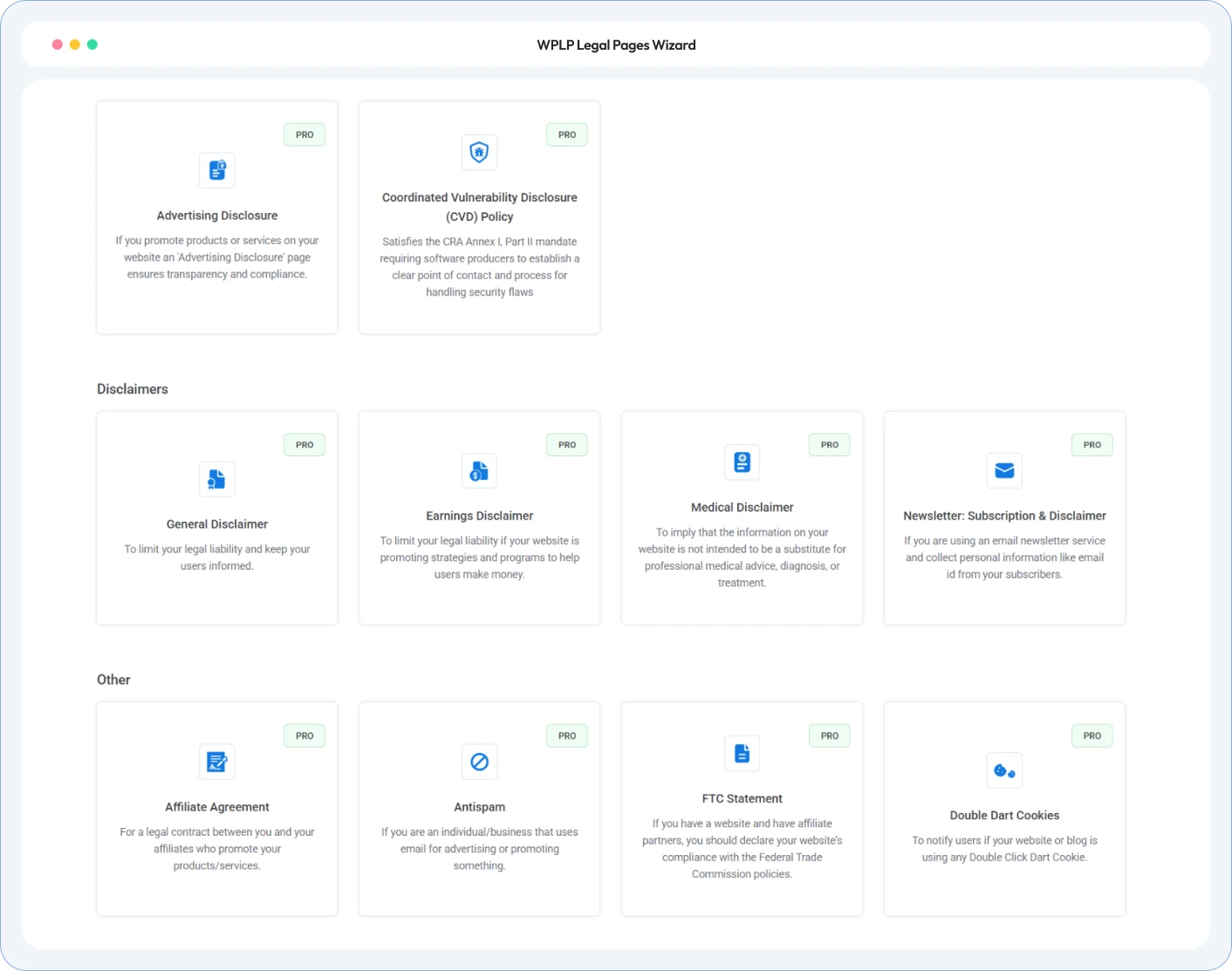
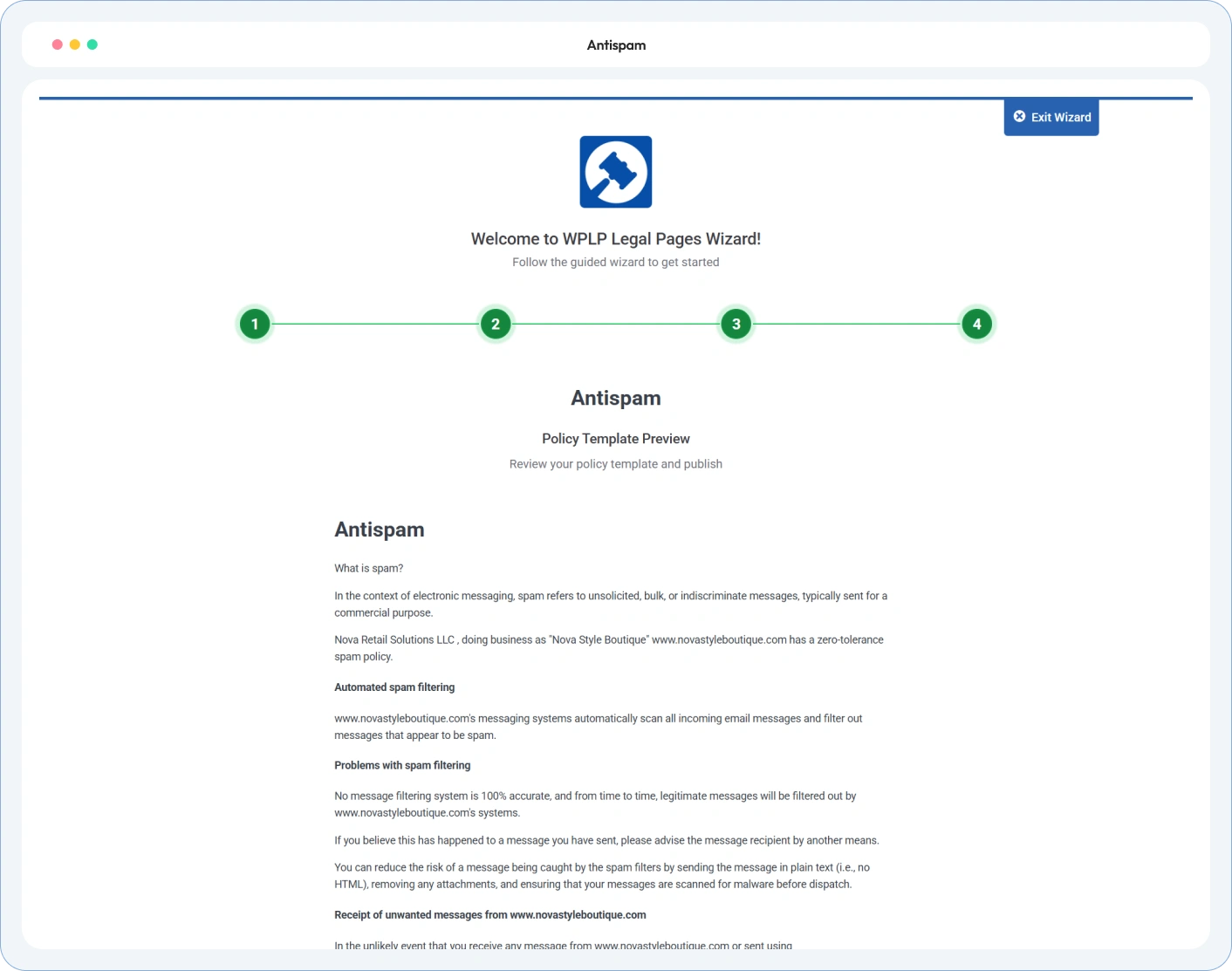
It’s retired. It described how your mail server filters incoming email, which most sites don’t need. Its “we don’t send spam” promise and the way to report unwanted email are now in the Newsletter Policy. Existing Antispam pages stay live until you delete them.
Run our free compliance audit in 60 seconds without installing anything.
Your newsletter policy points subscribers to other legal pages. WP Legal Pages generates those too.
Explains the affiliate links and sponsored content in your newsletter.
Explains how you use and protect subscriber data, with the same email provider as your newsletter policy.
Says your content isn't professional advice. Your newsletter policy links to it.
Pick your email tool, answer a few questions, and publish one page that covers sign-up, tracking, unsubscribers and your no-spam promise.