

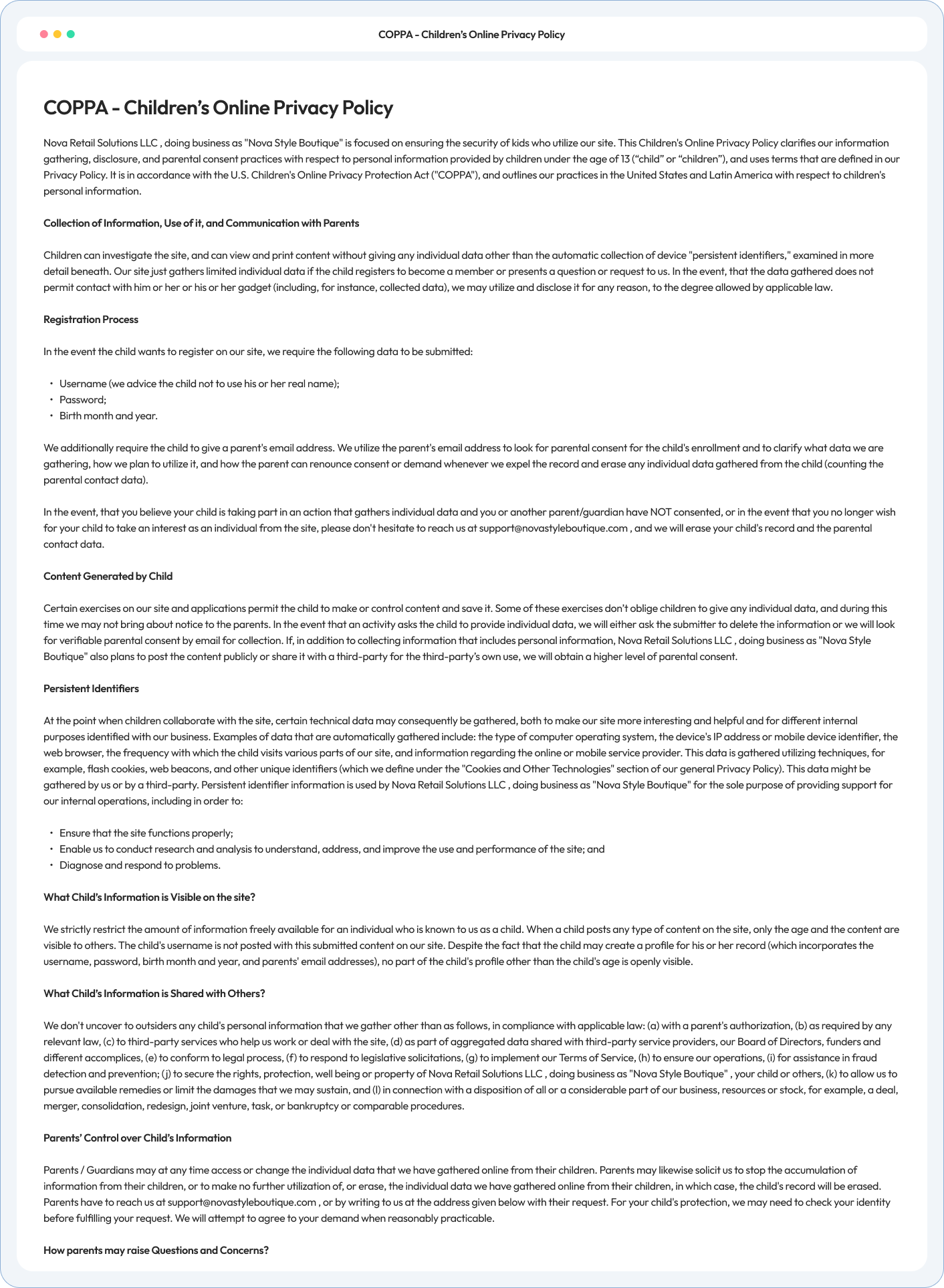
Generate a COPPA privacy policy that tells parents what you collect from children under 13, how you get their consent, who you share it with, and how long you keep it. Updated for the amended COPPA Rule, with a ready-to-send notice email for parents.
A children’s privacy policy (often called a COPPA privacy policy) explains how a website or app handles personal information from children under 13: what it collects, who collects it, how parents give consent, and how parents can review or delete it.
In the US, the Children’s Online Privacy Protection Act (COPPA) sets these rules. The FTC amended the COPPA Rule in 2025, and sites had to follow the new rules by 22 April 2026.
The policy is one part of COPPA. You also need to send parents a direct notice, get their consent before you collect anything, and keep a written retention policy and a written security programme.
• Do You Need One? •
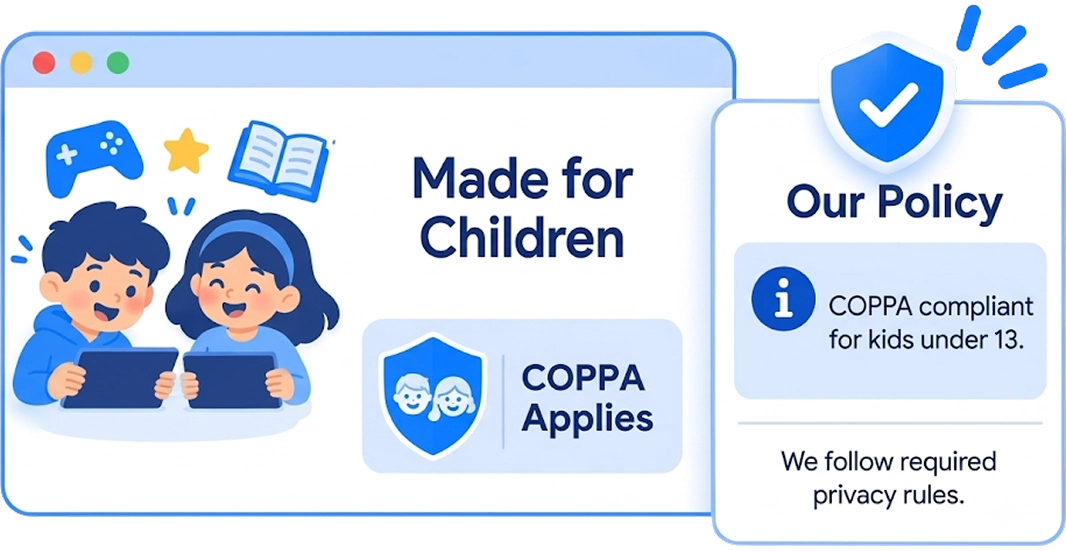
Games, learning and kids' content. COPPA applies to the whole service
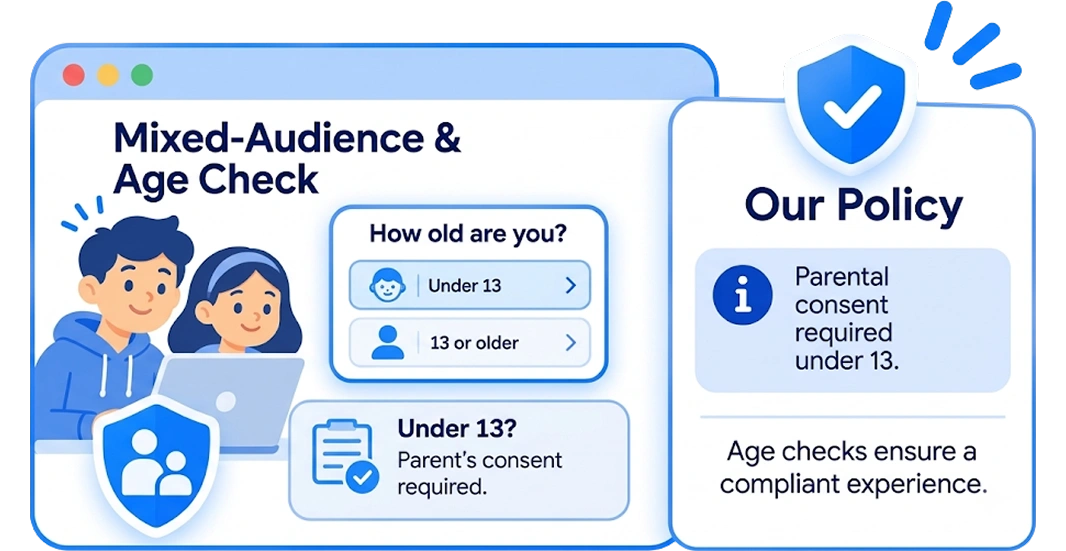
Users who say they're under 13 can use features that collect data only with a parent's consent.
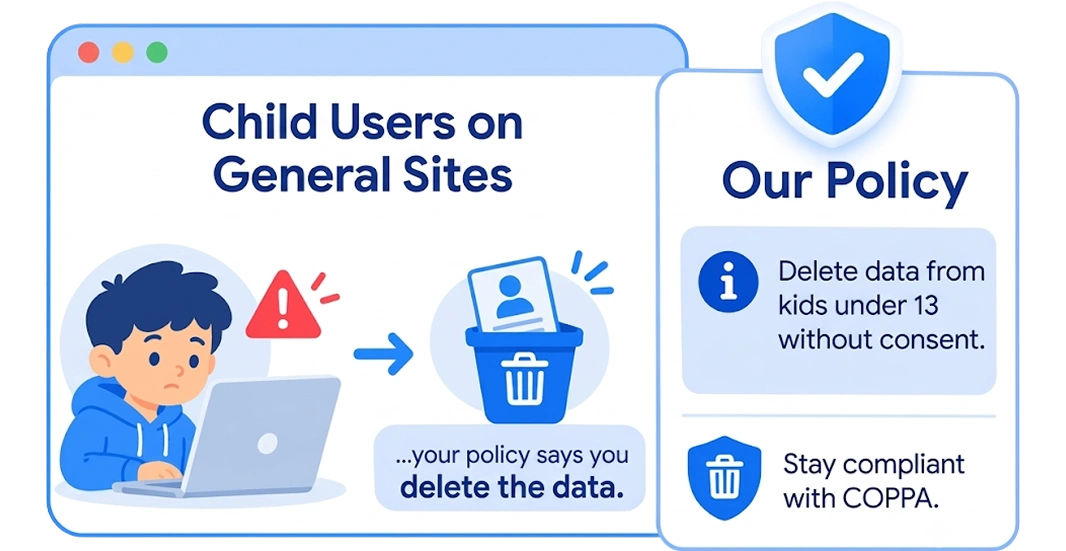
If you find you collected data from a child un der 13 without consent, your policy says you delete it.
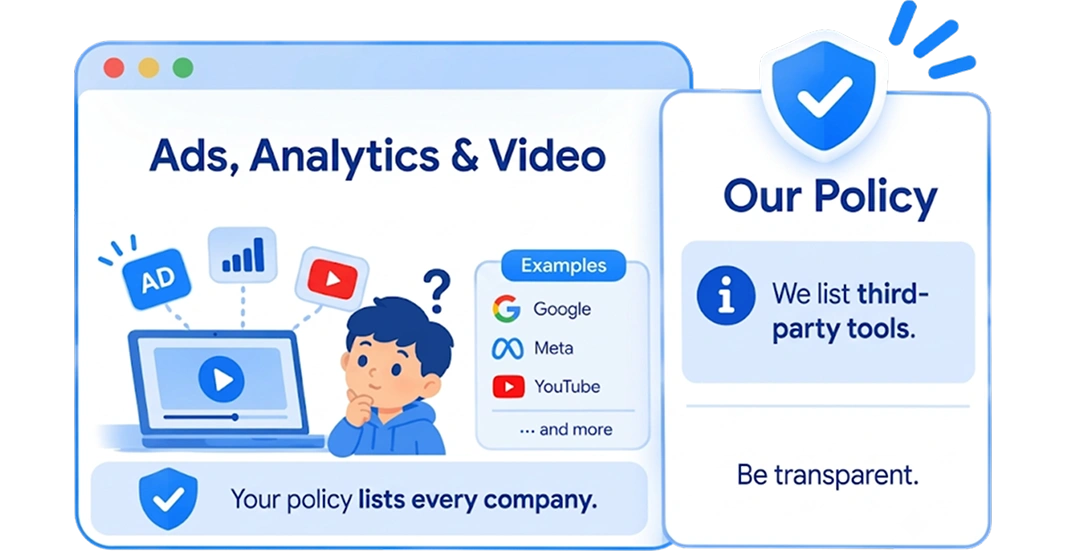
Third-party tools can collect device identifiers from children. Your policy names every company that does.
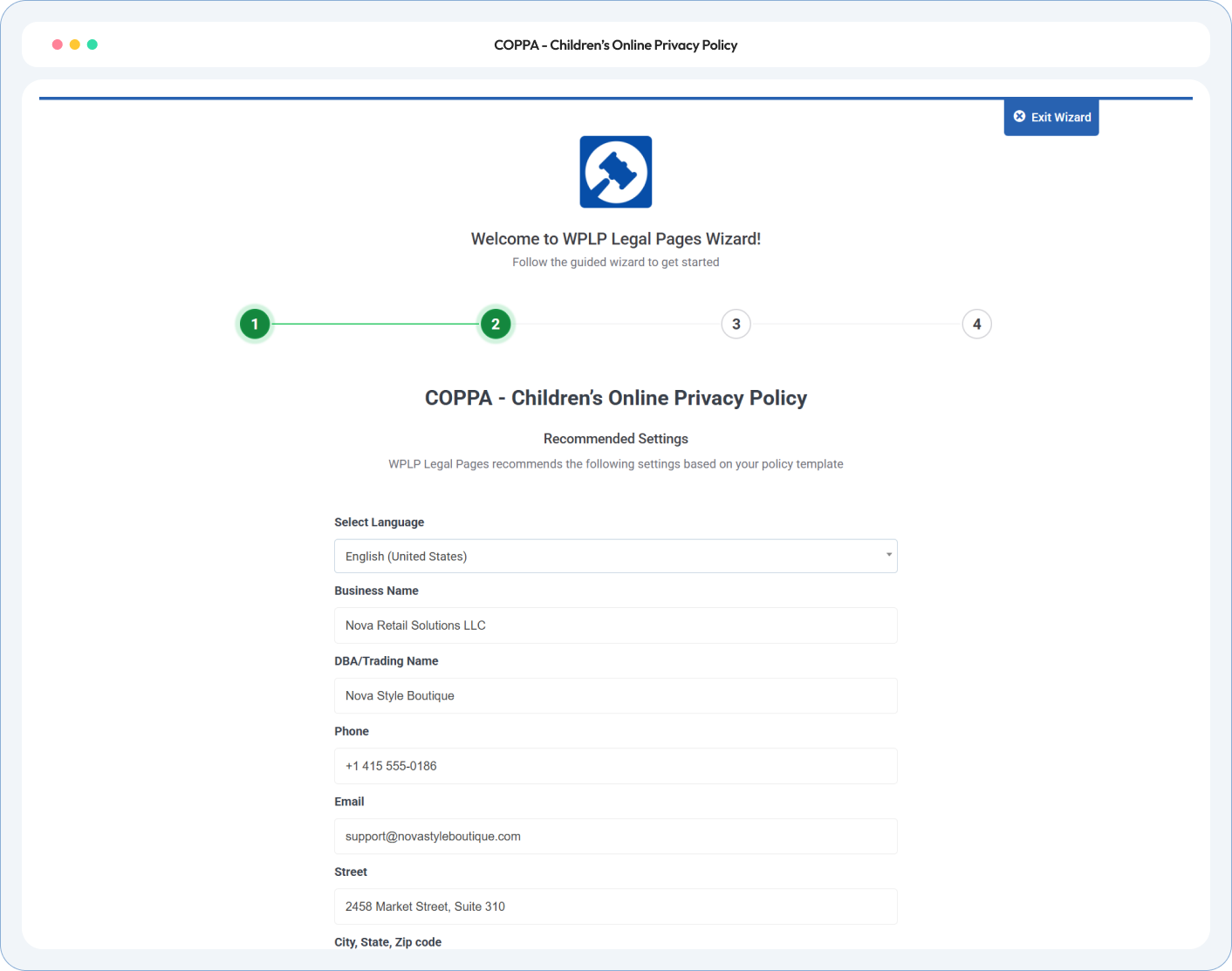
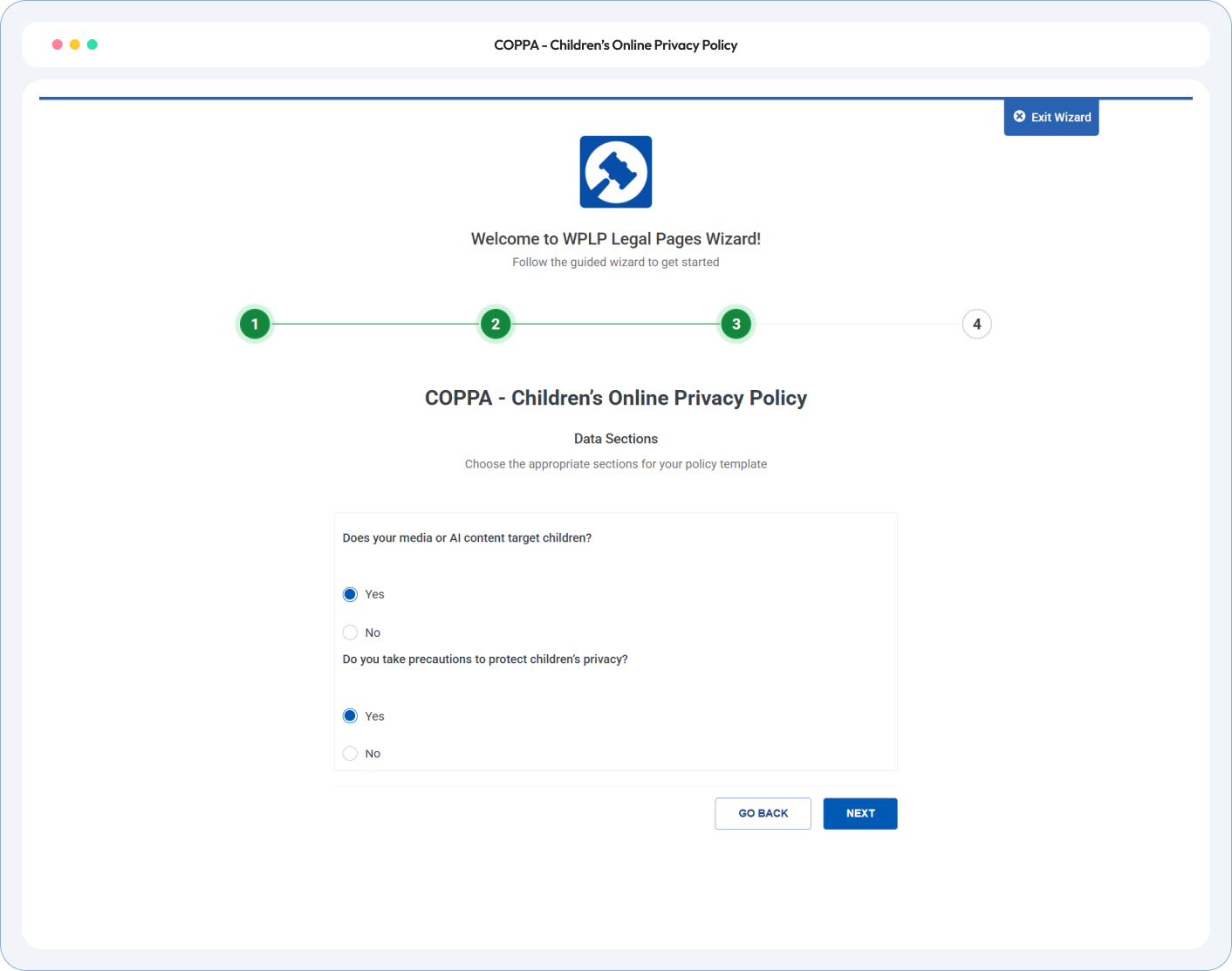
Choose your audience. Describe what you collect and how parents consent. Publish.
Pick directed to children under 13, mixed audience with an age check, or general audience. The opening of your policy changes to match.
Say what children give you, which other companies collect data on your site, which consent methods you use, and how long you keep each type of information. The page won't publish until these answers are complete.
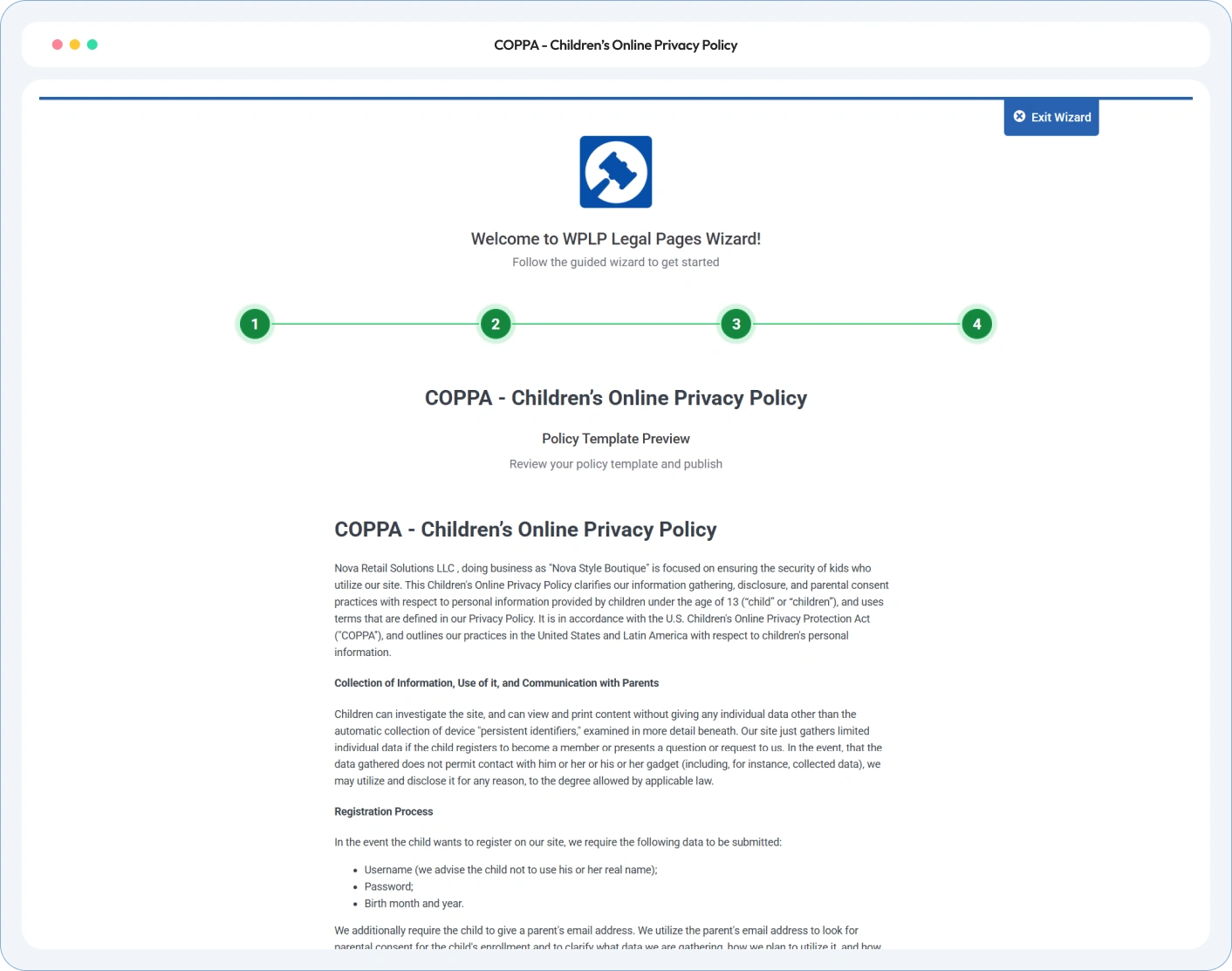
One click and the page is live. Link it from your home page and from every page where you collect information from children. The direct notice email goes to parents automatically when a child registers.
Your audience, your data, your consent methods. Sections that don’t apply are removed, so parents read only what’s true for your site.
• Policy Preview •
A sample policy for a children’s learning site, with every section on. Yours shows only what your service needs.
4.7/5 on WordPress.org • Based on 20,000+ active WordPress installs
Site owners, agencies and developers on how WP Legal Pages handles their legal pages.
You need one if your site or app is directed to children under 13, fully or partly, or if you know you collect personal information from children under 13.
The amended Rule took effect on 23 June 2025, and sites had to follow it by 22 April 2026. It adds biometric identifiers and government IDs to personal information, requires separate consent before sharing with third parties, and requires a written retention policy and security programme. The generated policy reflects these changes.
No. You also need to send parents a direct notice, get verifiable consent before you collect, keep written retention and security policies, and control what third parties collect on your site. The generator gives you the policy and the parent notice email.
Only with a follow-up step (“email plus”), and only if the information stays inside your service. If children post publicly or you share data with third parties, you need a stronger method, and the generator blocks publishing until you choose one.
Yes. These tools can collect device identifiers from children. Check each one, name it in your policy, and turn off personalised ads for content aimed at children.
No. It covers children under 13. Several US states now protect teens with rules on targeted ads, data sales and design features. If many of your users are teens, get advice.
The policy adds a section if you have users outside the US. In the EU, the age a child can consent ranges from 13 to 16, and the UK has an Age Appropriate Design Code. Get specialist advice.
Yes. COPPA enforcement carries significant civil penalties. Have a lawyer experienced in COPPA review your site and policy before you publish.
Run our free compliance audit in 60 seconds without installing anything.
Your children’s privacy policy adds to your main privacy policy. WP Legal Pages generates the pages around it too.
Shows a consent banner and controls which cookies and scripts load on your site.
Your children's privacy policy adds to your main Privacy Policy and links to it. Publish both from the same business details.
Sets the rules for using your site and accounts.
Choose your audience, describe what you collect and how parents consent, and publish a children’s privacy policy updated for the amended COPPA Rule.